What Nobody Tells You Before You Book a Long-Distance Move
What Nobody Tells You Before You Book a Long-Distance Move (And What to Ask Instead)
By S.B. Taylor Moving | Southern Maine's Care-Centered Moving Company
You've made the decision. Maybe it's a job, a family change, a new chapter — or maybe Maine winters finally won. Whatever brought you here, you're planning a long-distance move and you're starting to do your research.
Here's the thing: most of what comes up when you search "long-distance movers" is going to make this process feel harder than it needs to be. And a big reason for that is something most companies in this industry really don't want you to understand.
Let's change that.
The Industry Has Two Very Different Kinds of "Movers"
When you start getting quotes for a long-distance move, you'll notice the prices swing wildly. You'll hear from companies that seem incredibly responsive right up until they have your deposit. You'll get delivery windows that span weeks, not days. And if you ask too many questions, you might feel like you're being difficult.
That's not you. That's the broker model — and it runs most of the long-distance moving industry.
Here's how it actually works:
Most companies that market themselves as long-distance movers are actually brokers. They don't own trucks. They don't employ the crew that shows up at your door. What they do is collect your information, take a fee, and sell your move to a carrier — often whichever one bids the lowest.
Your belongings then go onto a truck with two or three other families' things, get routed through a regional hub or warehouse, and eventually make their way to you. The delivery window might be listed as "7–21 business days." Some people wait six weeks.
The crew at pickup? Often not the same crew at delivery.
The company you called and built trust with? No longer in the picture.
What You're Actually Searching For (And Didn't Know to Ask)
When people start researching long-distance movers, they're usually looking for reassurance around a few core fears:
- Will my things be safe?
- Will they actually show up and do what they said?
- How long will this really take?
- Will I be able to reach someone if something goes wrong?
These are the right fears to have. And the good news is, they're answerable — if you know what questions to ask before you book.
Before you commit to any long-distance mover, ask these:
1. Are you a licensed carrier or a broker?
This is the most important question. A licensed carrier owns and operates their trucks and employs their crew. A broker is a middleman. Both are legal — but you need to know which one you're dealing with. You can verify anyone's operating authority at the FMCSA website using their USDOT number.
2. Will my belongings be on a shared truck?
If the answer is yes — or if they sidestep the question — your move is likely going into a consolidated load. That's not automatically a dealbreaker, but it is the reason delivery windows are measured in weeks rather than days, and it's why communication tends to drop off after pickup.
3. Who will I call if I have a question during transport?
The answer should be a name and a number. If it's a general customer service line for a company two states away, that's a red flag.
4. What is your actual delivery window — not your estimate, your window?
A direct carrier doing an East Coast move should be talking about two to four days. If someone is quoting you a window of two to three weeks for a regional move, you're looking at consolidated freight.
5. What happens if something is damaged?
Ask about their claims process. Ask how long it takes. Ask what their valuation coverage options are. A company that handles this transparently is one that stands behind their work.
Why This Matters More Than You Think
Long-distance moves aren't just logistically complex — they're emotionally loaded.
You're not just moving boxes. You're moving the chair your mother sat in every morning. The table where your kids did homework for ten years. The things that have absorbed the life you built somewhere. Sending those items into a warehouse with strangers' belongings, without a reliable point of contact, without a real delivery timeline — it creates a particular kind of anxiety that doesn't go away until your things are in front of you.
We know this because before we ever loaded a single truck, we spent decades in healthcare — working in memory care facilities, with veterans, with hospice patients and their families. We watched people navigate some of the most disorienting transitions imaginable. And we learned early that the silence — the not knowing, the unreturned calls, the vague timelines — is often harder to manage than the transition itself.
That experience shaped how we run every move we do.
What a Different Kind of Long-Distance Move Looks Like
When S.B. Taylor Moving takes on a long-distance relocation, here's what that actually means:
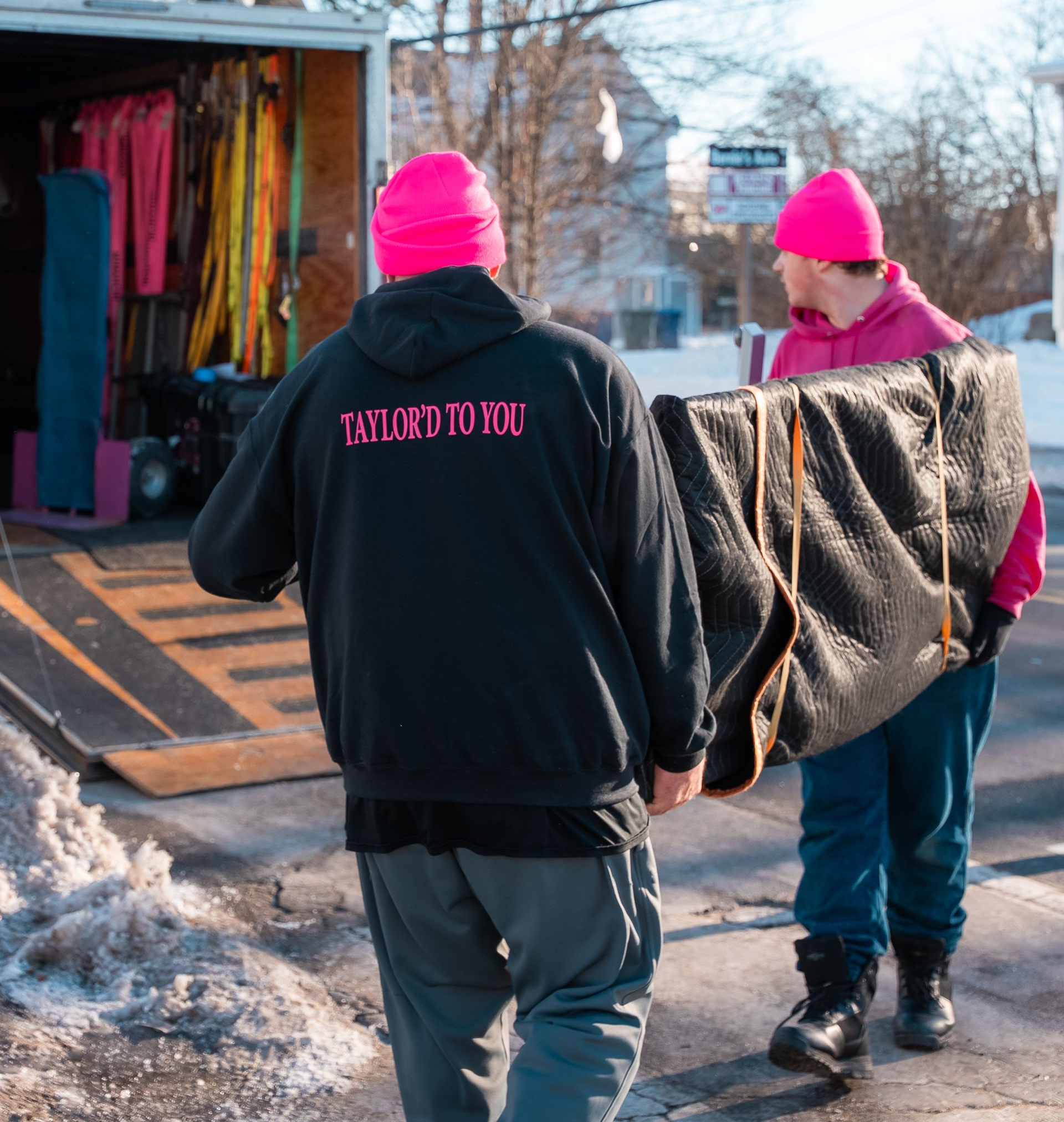
Your things travel on our truck. Not shared, not consolidated, not routed through a hub. We load it, we drive it, we deliver it.
For East Coast moves, you're looking at two to four days — not weeks. We time delivery around your arrival so you're not sleeping on an air mattress waiting for your life to show up.
We answer our phones. We send updates during transit. If something unexpected comes up on the road, you hear from us first.
We're federally licensed (USDOT #3771801 | MC #1351280) and we carry full operating authority as a carrier — not a broker. You can look us up.
And we treat what you've built like it matters, because it does.
Let's Talk About Cost — Honestly
This is where most moving companies get evasive, and we're going to do the opposite.
Long-distance moving is a significant investment. The cost of your move depends on so many variables — how much you have, how far you're going, whether you need packing services, the access at both locations, the time of year — that no two moves are priced the same.
Anyone who gives you a firm number before understanding your full picture is either guessing or setting you up for a surprise later.
What we can tell you is this: a direct-service move from a licensed carrier is going to look different on paper than a broker quote. Sometimes significantly. Sometimes less than you'd expect. And that gap — or lack of one — only makes sense when you understand what you're actually comparing.
A broker quote is often a starting number, not a final one. What gets added later can include long carry fees if the truck can't park close to your door, stair fees, shuttle fees, fuel surcharges applied at delivery, and storage-in-transit costs if your delivery window hasn't opened when your things arrive. These aren't hidden in the fine print to deceive you — they're listed — but they're easy to miss when you're focused on the headline number. By the time your belongings are on a truck somewhere in the middle of the country, you're not in a great negotiating position.
There's also a cost that doesn't show up in any quote. If you're waiting two to three weeks — or longer — for your things to arrive, you're covering hotels, eating every meal out, buying duplicates of things you need immediately, and managing the anxiety of not knowing where your belongings are or when they'll arrive. That's real money. That's real stress. It belongs in the comparison.
We will always give you a clear, honest picture of what your move requires before you commit to anything. No lowball number to get you in the door. No fees that appear on delivery day. If something about your move creates a real cost, we'll tell you upfront — because we'd rather lose a job over an honest conversation than earn one on a number that isn't real.
That's not a policy we wrote down somewhere. It's just how we operate.
A Quick Checklist Before You Book Anyone
Whether you choose us or not, here's what to have in hand before you sign anything with a long-distance mover:
- Confirm their USDOT number and verify it at fmcsa.dot.gov
- Ask directly: broker or carrier?
- Get their delivery window in writing — not an estimate, the actual contractual window
- Ask who your point of contact is during the move, not just before it
- Understand your valuation coverage options (basic released value vs. full value protection)
- Read reviews specifically mentioning communication and delivery timing — not just the loading day
- Ask whether the quote is binding or non-binding — a non-binding estimate can change
- Ask what additional fees could apply after the quote (stairs, long carry, shuttle, storage-in-transit)
- Factor in your own costs if delivery is delayed — hotels, meals, temporary purchases
A mover who gets defensive about any of these questions is telling you something important.
You Deserve to Feel Good About This Decision
Moving long-distance is a big deal. It deserves a company that treats it that way — not one that takes your deposit and disappears into a logistics chain you have no visibility into.
If you're planning a move from Maine and want to talk through what your specific situation would look like, we're happy to have that conversation. No pressure, no pitch — just honest answers.
You can reach us at 207-502-4035 or through sbtaylortransport.com.
We'd love to help you get there.
S.B. Taylor Moving is a woman-owned, family-run moving company based in Southern Maine. We specialize in senior transitions, life changes, and long-distance relocations with a care-centered approach to every move.