The Hardest Moving Day Nobody Prepares You For The spouse. The "just a visit" lie.
The Hardest Moving Day Nobody Prepares You For
Everyone talks about how hard it is to move a parent with dementia into memory care.
Nobody talks about what it’s like to be the spouse.Not the adult children, who are grieving in their own way, managing logistics, making calls. The spouse. The person who has slept beside this human for fifty years and has been told — gently, by doctors and social workers and everyone who loves them — that the kindest thing they can do today is say this is just a visit. That telling the truth would only cause pain that can’t be held onto. That this is the right thing.
They know that. They’ve agreed to it. And standing in the doorway of their own home on moving day, watching strangers carry out their partner’s things, it still feels like a betrayal.
That feeling doesn’t go away because the decision was right. It lives alongside the rightness of it, quietly, all day.
The Things Nobody Tells You Before That Day
You are going to say things that aren’t true. And that is okay.
When your person asks where they’re going, you are not going to say “to a memory care facility because you can no longer safely live at home.” You are going to say “let’s find you a warm bed for the night.” And that is not cruelty. That is the most loving thing you can do for a brain that cannot hold the full weight of that answer.
When your person says their mother is coming to pick them up — and their mother has been gone for thirty years — you are not going to tell them she died. You are going to say “tell me about her.” Because if you tell them the truth, they will grieve. Right now, in this moment, for the first time. And then they will forget. And you will have to tell them again. And again. Every time is the first time. Every time is devastating. You are not protecting them from the truth. You are protecting them from experiencing that loss over and over for the rest of their life.
This is called therapeutic redirection. Memory care staff do it all day. It is a practiced skill and it works in a way that honest explanation never can. You don’t take something away — you offer something instead. You don’t close a door — you open a different one. “Let’s find a warm bed for the night” is true. It is kind. And it gives their brain somewhere to go that feels safe.
Good facilities understand this deeply. Their staff is trained in it. They know how to validate what your person is feeling, step into their reality, and guide them gently toward comfort without forcing a confrontation their mind cannot win. When you walk away that day, your person is not going to be standing at the door demanding answers with nobody listening. They are going to be met — by people who know how to meet them — exactly where they are.
That is why the facility matters. That is why the staff matters. That is why telling them everything you know about your person — their history, their triggers, their comforts, what calms them and what doesn’t — is one of the most important things you can do before you leave.
We’ve Been in That Room
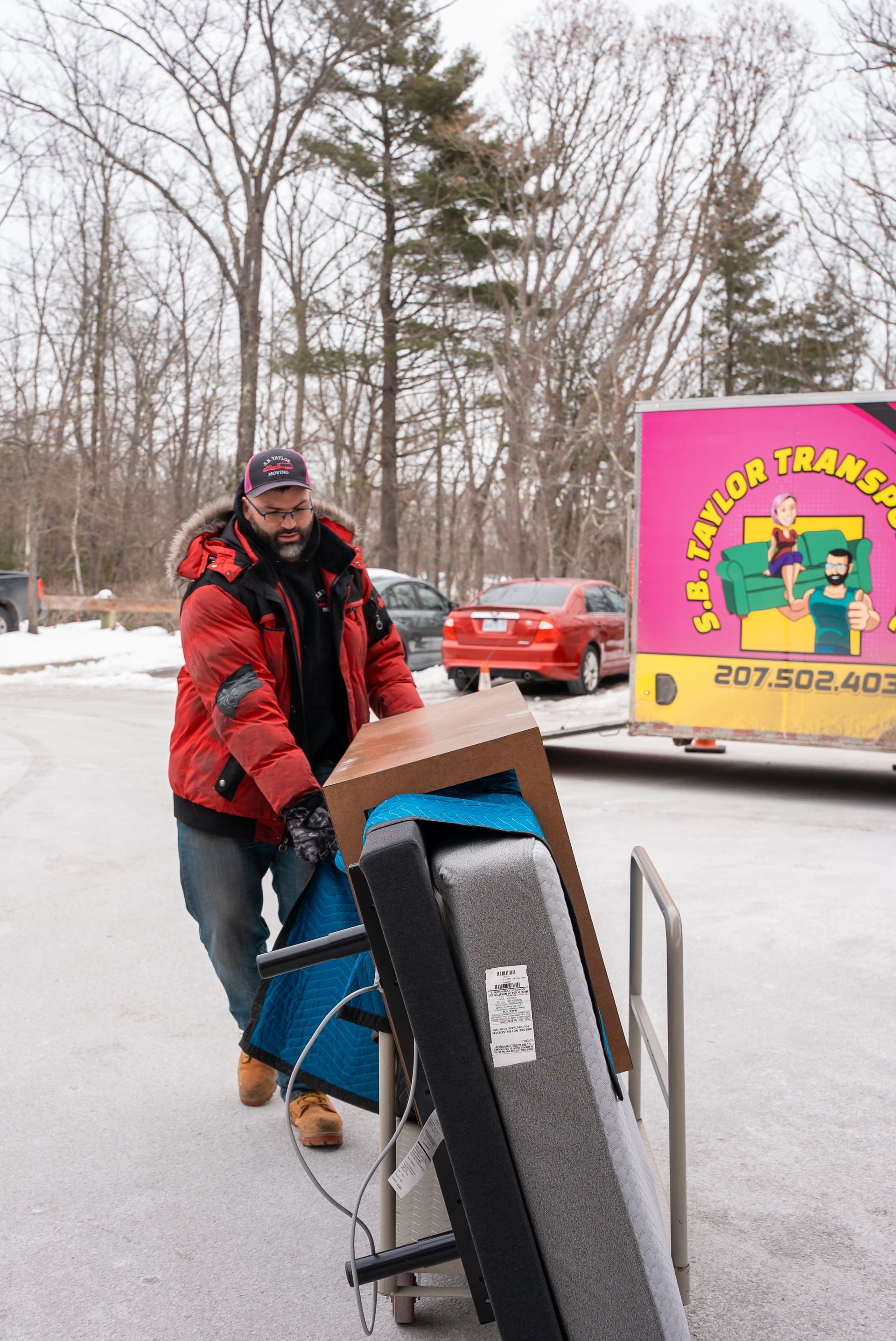
Our owner spent twenty years as a CNA in memory care and hospice before starting this company. Not as a stepping stone to something else — as a calling. Which means that when we show up to a move like this, we’re not just moving furniture. We’re walking into one of the hardest mornings of someone’s life, and we know it.
Our team reads the room. They can tell the difference between someone who needs to talk — who needs the distraction of conversation to get through the next hour — and someone who needs the crew to simply work with care and let the silence be quiet.
We don’t rush. We don’t make noise. We handle what we’re carrying like it matters, because it does.
Moving a Person with Dementia Isn’t Like Moving Anyone Else
You can’t explain to them what’s happening. You can’t reassure them with logistics. Their whole world is being picked up and relocated, and they may not understand why, or even that it’s happening at all.
Before we arrive, families often brief us the way you’d brief a care team coming on shift. They tell us what their mom is like in the morning. Whether she’s more settled before noon or after lunch. What her favorite things in the room are — the blue throw blanket, the framed photo of the grandchildren, the little ceramic dog on the windowsill. They tell us stories.
We listen to all of it. Because if we cross paths with her on the other side of the move, we want to be able to say something that lands right. To mention the grandchildren by name. To know that the baby doll she carries isn’t a toy — it’s her baby, and we would never treat it like anything less.
That’s not a technique. That’s just paying attention.
What Comes Next
We want to be honest with you about something: moving day is not the hardest day. The weeks after are.
Your loved one will need time to adjust. So will you. So will the spouse who is now coming home to a quieter house than they’ve ever known. There is no timeline for that. There is no right way to feel it. Some days will feel okay and some days won’t, and both of those are allowed.
What helps — more than most people expect — is staying connected.
Visit. Call the facility just to check in. Ask how they’re doing, what kind of day they had, whether they’ve found a routine yet. Facilities want to hear from you. They want to know your person the way you know them — their favorite team, their go-to TV channel, what makes them light up, and just as importantly, what to avoid. The more the staff knows, the more they can meet your loved one where they are instead of just managing them.
That information matters to us too.
It also helps us to know what we might walk into.
Memory care can surface things that feel shocking if you’re not prepared for them. A woman who trusted her husband completely may not recognize him now — and may have developed beliefs about him that aren’t rooted in reality. We have been mistaken for a mistress. For a daughter. For a threat. None of it is personal. All of it is the disease. But it’s a lot easier to navigate when we know ahead of time what the dynamic is, so we aren’t caught off guard in a moment that’s already tender.
Sometimes the confusion isn’t the dementia at all. A sudden change in behavior — agitation, disorientation, things that seem to come from nowhere — can be a UTI. It sounds simple but it’s one of the most commonly missed things in memory care settings. If something seems off, say something to the facility staff. You know your person. Trust that.
You Are Building a Team Around Them
When we move someone into memory care, we’re often going to see them again. We work with facilities regularly. We are going to become familiar faces to the people who live there. We take that seriously. We’re not trying to replace anyone — not the family, not the staff, not the life that existed before. We are simply trying to make sure that every time we’re present, your loved one feels safe, recognized, and treated with the dignity they deserve.
And please — use the support that’s available to you. Most facilities offer counseling, family support groups, and resources specifically for spouses and adult children navigating this transition. These aren’t extras. They’re there because this is hard and you shouldn’t have to process it alone in a parking lot on the drive home.
And that includes you. The spouse who drove home alone for the first time. The adult child who held it together all day and fell apart in the car. You went through something too. The grief is real even when the decision was right. Please don’t
skip over your own support because you’re focused on theirs.
And please — do not isolate. That quiet house is going to feel enormous. The instinct is to pull inward, to stay home, to feel like you don’t have the right to struggle when your person is the one who is sick. But you have been a caregiver, possibly for years, and that role just shifted in a way that leaves a hole. That is a real loss. It deserves real support.
Call a friend. Accept the invitation you would normally decline. Tell someone how you’re actually doing. The facilities have resources for you too — counseling, spouse support groups, people who have sat exactly where you are sitting. Use them.
You took care of your person. Now let someone help take care of you.
And here is something we want you to hear clearly: this is not goodbye.
You can still see your person every single day. You can bring food from home — their favorite soup, the cookies they love, the things that taste like comfort. You can sit with them, hold their hand, watch their show together. You can still be their person. That does not go away.
What does go away is the weight of being their only safety net. You can go to the grocery store now without rushing. You can sleep through the night knowing someone is there. You can have a moment — just a moment — to breathe. That is not abandonment. That is what this decision was supposed to give you. Please let it.
Go have lunch with them. Facilities love it. Your person loves it. It matters more than you know — not just to them, but to the staff who sees how much they are still loved.
You are not handing your person to strangers and walking away. You are building a team around them. We are honored to be part of it.
If you’re in the middle of coordinating a move like this — for a parent, a spouse, a family member — and you don’t know how to make it work without causing more pain than necessary, call us.
We’re available daily from 6 a.m. to 6 p.m. at 207-502-4035. You don’t have to have it figured out. You just have to make the call.
S.B. Taylor Moving | South Portland, Maine
Serving York and Cumberland Counties
USDOT #3771801 | MC #1351280